

From £3,000 per eye · complimentary assessment
Remove Your Clouded Lens and Restore Clearer, Sharper Vision.
Performed by our consultant-led team using advanced lens technology and personalised planning.
Home » Treatments » Lens Replacement Surgery » Cataract Surgery


 Trustindex verifies that the original source of the review is Google.
 Trustindex verifies that the original source of the review is Google.
 Trustindex verifies that the original source of the review is Google.
 Trustindex verifies that the original source of the review is Google.
 Trustindex verifies that the original source of the review is Google.
 Trustindex verifies that the original source of the review is Google.
 Trustindex verifies that the original source of the review is Google.
 Trustindex verifies that the original source of the review is Google.
 Trustindex verifies that the original source of the review is Google.
If your vision has become cloudy, dim or sensitive to glare, cataracts may be the cause. Cataract surgery is one of the most commonly performed and well-established eye procedures, designed to remove the clouded natural lens and replace it with a clear artificial lens.
Cataracts usually develop gradually with age, though they can also result from injury, certain medications or other health conditions. As they progress, they can affect everyday tasks such as reading, driving and recognising faces. Surgery restores clarity by replacing the affected lens with an intraocular lens (IOL) chosen to suit your eyes and lifestyle.
At The Harley Street Eye Centre, cataract surgery is planned and performed by a consultant ophthalmologist. We use advanced diagnostic imaging to assess your eyes and select the most appropriate lens for your prescription, visual needs and daily activities.
Cataract surgery is a procedure that removes the eye’s clouded natural lens and replaces it with a clear artificial intraocular lens (IOL). It is used to treat cataracts, a common age-related condition in which the lens gradually becomes cloudy and reduces the quality of your vision.
The natural lens sits behind the iris and focuses light onto the retina. When a cataract forms, the lens hardens and clouds, scattering light and causing symptoms such as blurred vision, faded colours, glare and difficulty seeing at night. As the clouding is within the lens itself, glasses can no longer fully correct the problem, and lens replacement surgery is required.
The procedure is typically performed as a day case using a technique called phacoemulsification, in which the cloudy lens is gently broken up and removed before the new lens is put in its place. Each eye is usually treated separately.
Removes the clouded natural lens and replaces it with a clear IOL
Treats age-related and other forms of cataract
Usually performed as a day procedure
Uses phacoemulsification, a modern, well-established technique
Lens choice tailored to your prescription and lifestyle
Cataract surgery is performed when a cataract begins to interfere with your vision and daily life. As cataracts are progressive, symptoms tend to worsen over time, and surgery is the only effective way to restore the clarity lost as the lens clouds.
You may be advised to consider cataract surgery if you experience:
Removing the cataract not only restores clearer vision but, depending on the lens selected, can also reduce your dependence on glasses for some or all distances. Your consultant will discuss the most suitable option for you following a full assessment.
A cataract develops when the natural lens of the eye becomes cloudy, reducing the amount and quality of light reaching the retina.
One of the most important parts of planning cataract surgery is selecting the right intraocular lens. The lens you choose influences how you see at different distances and how much you rely on glasses afterwards.
Monofocal lenses provide clear vision at a single distance, usually distance vision. Many patients who choose monofocal lenses still use glasses for activities such as reading.
EDOF lenses provide a continuous range of vision from distance to intermediate, which can help with activities such as using a computer or seeing the dashboard while driving.
Multifocal lenses are designed to provide clear vision at multiple distances, helping to reduce dependence on glasses for both near and distance tasks in suitable patients.

The Harley Street Eye Centre’s clinical research in refractive and cataract surgery helped pioneer a mix-and-match lens strategy, combining different lens technologies across the two eyes. By tailoring the lens combination to each eye, this approach aims to achieve a wide range of clear vision, reduce glare and halos and improve contrast. Your consultant will explain whether this approach suits you.
Most adults with a diagnosed cataract that is affecting their vision are suitable for cataract surgery. Whether the procedure is right for you depends on a comprehensive assessment of your eyes and your overall eye health.
You may be a suitable candidate if you:
During your consultation, your consultant will carry out a detailed examination using advanced diagnostic imaging to confirm the extent of your cataract and determine whether surgery is the most appropriate option for your individual needs.
A detailed eye examination helps assess the severity of a cataract and determine whether cataract surgery may be appropriate.
Hear directly from patients whose lives were changed by surgeon-led care at The Harley Street Eye Centre.

Cadell
Laser Eye Surgery
“This surgery changed my life , it was like night and day. I was back to playing football like nothing happened.”

Joel
Laser Eye Surgery
“I literally woke up the next morning and could see , it was just like nothing had ever happened.”
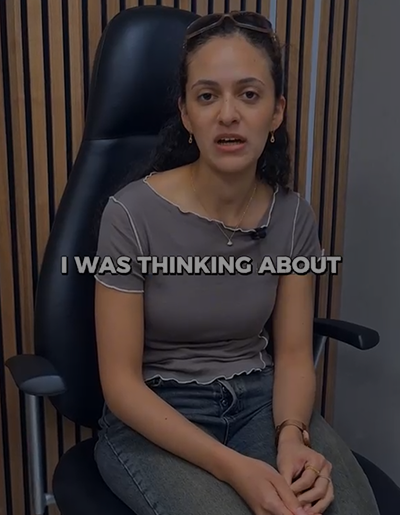
Amira
Laser Eye Surgery
“My questions were answered. I felt a lot more comfortable and I didn’t feel like I was ever rushed or pressured into making the decision.”

Sharon
Laser Eye Surgery
“I thought that was it… And once I saw him — oh my God, it was like… I said to him, you’re like my guardian angel. Because I just felt safe. I actually felt safe in his hands.”
From your initial consultation through surgery and follow-up care, an experienced consultant ophthalmologist leads every stage of your care. Using advanced diagnostic technology, we’ll conduct a detailed assessment, confirm your diagnosis, and develop a personalised treatment plan tailored to your needs.
01
Getting started is straightforward. You can contact our clinic directly or book your complimentary assessment online, and our team will guide you through the next steps.
Before your appointment, we’ll ask a few questions about your:
This information helps us prepare for your consultation and tailor your assessment to your needs. Flexible appointment times and same-day consultations may also be available.
02
Your consultation begins with a detailed discussion of your symptoms, vision, and eye health, followed by a thorough eye examination. To confirm your diagnosis and plan your treatment, we use advanced diagnostic technology, which may include:
These assessments allow your specialist to confirm the extent of your cataract, take precise measurements for your new lens and determine the most appropriate lens type for your eyes and lifestyle.
03
Following your assessment, your consultant will explain the findings and discuss whether cataract surgery is recommended for you.
You’ll receive clear guidance on:
If you need more time to consider your options, we’re happy to answer any questions before you decide.
04
Cataract surgery is typically performed as a day procedure. Before your treatment, your surgeon will review your eye measurements, lens calculations and treatment plan to confirm that the most appropriate lens has been selected for your eye.
During the procedure, a small incision is made in the surface of the eye, and the clouded natural lens is gently broken up and removed using a technique called phacoemulsification. The clear artificial intraocular lens is then inserted and positioned where your natural lens used to sit.
The procedure is usually performed under local anaesthetic eye drops, and typically takes around 20–30 minutes per eye. Your surgeon will discuss the most suitable anaesthetic option with you before treatment.
05
Following cataract surgery, you’ll attend a series of follow-up appointments so your surgeon can monitor your healing, check your vision and confirm the lens is settling correctly.
Your postoperative care may include:
Many patients notice improved vision within a few days, although it can take a little longer for your eyes to settle fully. Where both eyes require treatment, they are usually treated on separate occasions, allowing the first eye to recover before the second is scheduled. Your surgeon will provide personalised advice throughout your recovery and confirm when it is safe to resume your usual activities.
Cataract surgery starts from £3,000 per eye. The total cost depends on your individual treatment plan, the recommended lens type, and whether one or both eyes are being treated. As every patient is different, we’ll confirm your final treatment cost after your comprehensive consultation and assessment. We believe in transparent pricing, so you’ll receive a detailed breakdown of all fees before making any decisions.
Your Treatment Fee Typically Includes:
Should you decide to proceed with treatment, a £500 deposit is payable at the time of booking. To help make treatment more accessible, we also offer flexible payment plans and 0% interest finance options, allowing you to spread the cost over time.

Our team of experienced eye specialists combines decades of clinical expertise with a strong commitment to innovation, precision and patient-centred care.
Founder and Medical Director, Mr Marwan Ghabra, is a highly experienced ophthalmic surgeon, medical leader and innovator with more than 30 years of clinical and surgical experience. He is widely recognised for his work in corneal disease, keratoconus, cataract surgery and advanced refractive procedures, with particular expertise in complex and high-risk cases.

At The Harley Street Eye Centre, advanced technology is central to the planning and delivery of cataract surgery. Accurate diagnostics and precise eye measurements are essential to determine lens type, calculate lens power, and achieve personalised visual outcomes.
At The Harley Street Eye Centre, we use advanced diagnostic and imaging systems to assess the cornea, lens and other key structures of the eye with high precision. These detailed measurements support accurate lens selection and careful surgical planning, helping us tailor your treatment to your eyes and visual goals.

We believe confidence in treatment begins with clear communication, careful assessment, and honest clinical advice, and our approach is grounded in transparency, safety, and consistently high standards of care.
Every patient receives a personalised treatment plan tailored to their eye health, prescription, lifestyle, and visual goals. We take the time to discuss suitability, expected outcomes, limitations and alternative options, helping patients make informed decisions with confidence.
For those considering treatment, we are also happy to facilitate opportunities to speak with patients who have undergone similar procedures, allowing prospective patients to hear first-hand experiences where appropriate.

Mr Marwan Ghabra is the Founder and Medical Director of The Harley Street Eye Centre, where he leads a multidisciplinary team delivering advanced, consultant-led eye care across a wide range of ophthalmic subspecialties, particularly in corneal disease and keratoconus.
He is the developer of the “Ghabra Technique”, an innovative approach to keratoconus management designed to address both anterior and posterior corneal irregularities. Alongside his private practice, he continues to manage complex surgical cases within the NHS, contributes to ophthalmic innovation and clinical research, and remains actively involved in education as a lecturer, mentor and international speaker.

Cataract surgery is usually performed as a day procedure, and the surgery itself typically takes around 20 to 30 minutes per eye. You’ll spend additional time at the clinic before and after the procedure for preparation, final checks and a postoperative assessment before returning home the same day. Where both eyes need treatment, each is usually scheduled separately.
Cataract surgery is usually performed under local anaesthetic eye drops, so most patients experience little to no pain during the procedure. You may feel light pressure or notice unusual lights during the surgery. Mild irritation, watering or a gritty sensation afterwards is common and usually settles within a few days.
Whether you need glasses after cataract surgery depends largely on the lens type you choose. Monofocal lenses often mean you still need glasses for some tasks, such as reading. In contrast, multifocal and extended depth of focus lenses are designed to reduce dependence on glasses across a wider range of distances. Your consultant will discuss which lens best matches your visual goals during your assessment.
Cataract surgery is one of the most common and well-established surgical procedures, with a strong safety record when performed by an experienced surgeon. As with any surgery, potential risks and complications exist, and your surgeon will discuss them with you before treatment. A thorough assessment beforehand helps ensure surgery is recommended only when it is appropriate for your eyes.
Cataract surgery is considered a long-term treatment. Once the clouded natural lens has been removed and replaced with an artificial lens, the cataract cannot return. Some patients later develop a condition called posterior capsule opacification, where the membrane behind the lens becomes cloudy, but this can be treated quickly and effectively with a straightforward laser procedure.
There is no proven way to prevent cataracts entirely, as they are most often a natural part of ageing. However, some measures may help slow their development, such as protecting your eyes from UV light, not smoking, managing conditions like diabetes and attending regular eye examinations. Regular check-ups also help identify and monitor cataracts early.
Your cataract surgery assessment is complimentary. An hour with our diagnostic team and a real conversation with the surgeon who would treat you. No obligation.