

Complimentary assessment
Myopia treatment tailored to your eyes, prescription and lifestyle, from glasses and contact lenses to advanced laser and lens-based options.
Home » Conditions We Treat » Myopia Treatment


 Trustindex verifies that the original source of the review is Google.
 Trustindex verifies that the original source of the review is Google.
 Trustindex verifies that the original source of the review is Google.
 Trustindex verifies that the original source of the review is Google.
 Trustindex verifies that the original source of the review is Google.
 Trustindex verifies that the original source of the review is Google.
 Trustindex verifies that the original source of the review is Google.
 Trustindex verifies that the original source of the review is Google.
 Trustindex verifies that the original source of the review is Google.
Myopia, or short-sightedness, is the most common refractive error in the world. Distant objects look blurred and soft-edged while close work stays comfortably sharp, which is why it is so often picked up at school, at the cinema or behind the wheel rather than in a reading chair.
For most people myopia is a straightforward optical problem with several good solutions. For a smaller group with higher prescriptions it is also a long-term eye health matter, because a longer eye carries a raised risk of retinal problems later in life. Both aspects are assessed at Harley Street Eye Centre.
In a myopic eye, light entering the eye is brought into focus slightly in front of the retina instead of directly on it. This happens either because the eyeball has grown fractionally too long from front to back, or because the cornea is more steeply curved than average. The result is the same: distant images land out of focus.
Myopia usually appears in childhood, progresses through the teenage years as the eye grows, and tends to stabilise in the early twenties. Prescriptions above roughly -6.00 dioptres are described as high myopia, and are associated with a higher lifetime risk of retinal detachment, glaucoma and myopic changes at the macula. This does not mean problems are inevitable, but it does mean the retina deserves proper examination rather than a quick glance.
Symptoms tend to build gradually, and children in particular often do not report them because blurred distance vision is all they have ever known. Common signs include:
A rapid change in prescription in an adult is worth investigating rather than simply correcting, as it can occasionally point to an underlying cause such as early cataract or a corneal condition.
Myopia develops through a combination of inherited tendency and environment. Recognised contributing factors include:
Assessment covers both the prescription itself and the health of the eye behind it. A myopia assessment at The Harley Street Eye Centre may include:
Visual acuity testing and a full refraction to establish the exact prescription
Optical biometry to measure axial length, which is the most useful measure of progression in children
Corneal topography and tomography using the Oculus AXL Pentacam to map corneal shape and thickness
A dilated examination of the peripheral retina to look for thinning, lattice degeneration or tears
Measurement of intraocular pressure and assessment of the optic nerve
Tear film assessment, which influences suitability for laser correction
These measurements also determine which correction options are open to you. Corneal thickness and pupil size, for example, can be the deciding factors between laser and lens-based treatment.
Glasses and contact lenses correct myopia perfectly well. Where you would prefer not to depend on them, several surgical options exist, and the right one depends on your prescription, corneal thickness and lifestyle.
A flap-based laser procedure that reshapes the cornea to move the focal point back onto the retina. Recovery is quick, with most patients seeing well the following day. Best suited to low and moderate myopia with adequate corneal thickness.
A no-touch surface laser procedure that removes the outer corneal layer with the laser itself, leaving no flap. Often preferred for thinner corneas, for contact sports, or where flap creation carries additional risk. Visual recovery takes longer than LASIK.
A minimally invasive keyhole technique in which a small lenticule of tissue is removed through a tiny incision. Preserves more of the corneal surface nerves, which can help patients prone to dry eye.
ICL (Implantable Collamer Lens)
A corrective lens placed inside the eye in front of the natural lens, without removing corneal tissue. Particularly valuable for high myopia, thin corneas or irregular corneal shape, and it is reversible.
Replacement of the natural lens with an intraocular lens of the required power. Generally considered for patients over 45, where it also addresses reading vision and removes any future cataract.
For children, the aim is to slow progression rather than simply update the prescription. Options include specialist spectacle and contact lens designs, low-dose atropine and daylight advice, with axial length tracked at each visit.
Glasses or contact lenses
Glasses and contact lenses correct myopia effectively. Discuss with Harley Street Eye Centre the best options for your eyes.
If you are short-sighted, particularly with a high prescription, contact us the same day if you notice a sudden shower of new floaters, flashes of light in your peripheral vision, or a dark shadow or curtain moving across your field of view.
These are the warning signs of a retinal tear or detachment, which is a surgical emergency. Treated promptly the outlook is generally good; delayed, the risk to central vision rises sharply.
Hear directly from patients whose lives were changed by surgeon-led care at The Harley Street Eye Centre.
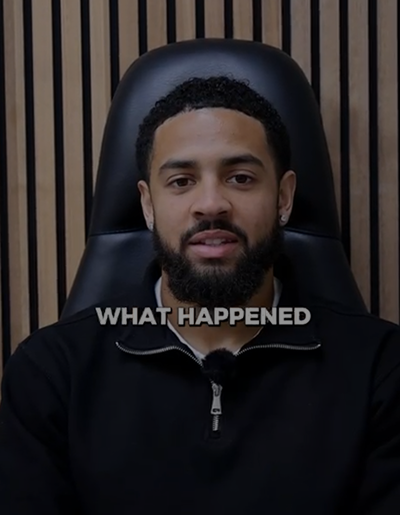
Cadell
Laser Eye Surgery
“This surgery changed my life , it was like night and day. I was back to playing football like nothing happened.”
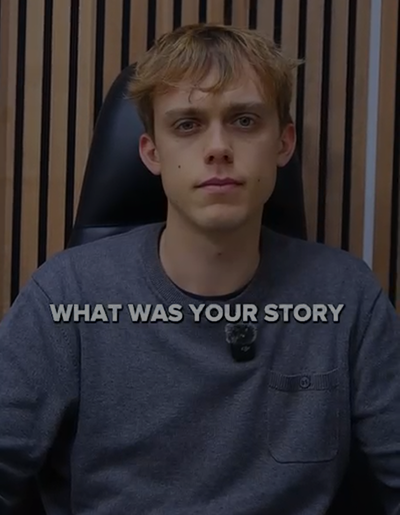
Joel
Laser Eye Surgery
“I literally woke up the next morning and could see , it was just like nothing had ever happened.”
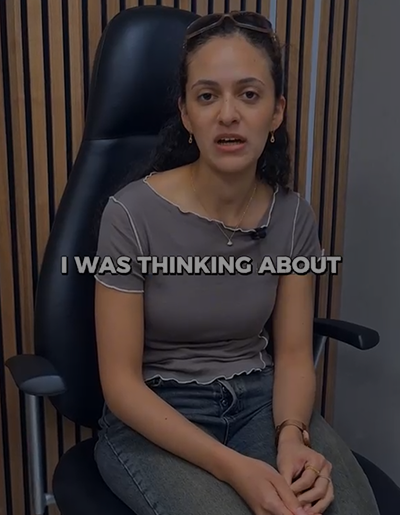
Amira
Laser Eye Surgery
“My questions were answered. I felt a lot more comfortable and I didn’t feel like I was ever rushed or pressured into making the decision.”
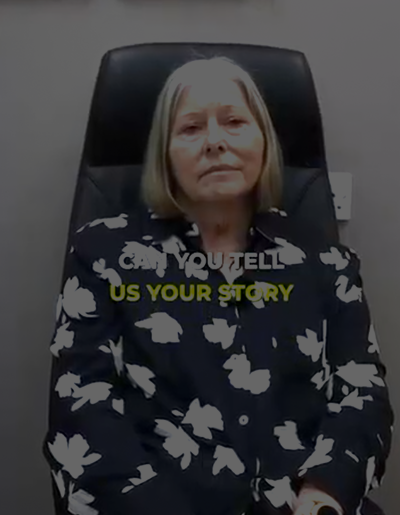
Sharon
Laser Eye Surgery
“I thought that was it… And once I saw him — oh my God, it was like… I said to him, you’re like my guardian angel. Because I just felt safe. I actually felt safe in his hands.”

Our consultants are sub-specialists, not generalists. Founder and Medical Director Mr Marwan Ghabra brings more than 30 years of clinical and surgical experience, and every patient is seen and assessed by the consultant who would go on to treat them. You will not be passed between staff for the parts of your care that matter.

Diagnosis is only as good as the imaging behind it. Our diagnostic suite includes corneal topography and tomography, the Oculus AXL Pentacam, OCT and optical biometry, so that findings are measured and tracked over time rather than estimated. Where a condition is progressive, this is what allows change to be identified early.

We are regulated by the Care Quality Commission and our approach is built on honest clinical advice. If a condition needs monitoring rather than treatment, we will say so. If a treatment is unlikely to give you the result you are hoping for, we will say that too, and explain what the realistic alternatives are.

Mr Marwan Ghabra is the Founder and Medical Director of The Harley Street Eye Centre, where he leads a multidisciplinary team delivering advanced, consultant-led eye care across a wide range of ophthalmic subspecialties, particularly in corneal disease and keratoconus.
He is the developer of the “Ghabra Technique”, an innovative approach to keratoconus management designed to address both anterior and posterior corneal irregularities. Alongside his private practice, he continues to manage complex surgical cases within the NHS, contributes to ophthalmic innovation and clinical research, and remains actively involved in education as a lecturer, mentor and international speaker.
Something specific on your mind?
We’re one call away on 07401 183176.
The underlying change in the shape and length of the eye cannot be undone. What treatment does is redirect light so that it focuses correctly, either by reshaping the cornea or by placing a lens inside the eye. The visual result can be excellent, but the eye itself remains anatomically myopic, which is why retinal monitoring continues to matter after laser or lens surgery.
The reshaping of the cornea is permanent. However, the eye continues to age, so most patients will still need reading glasses in their mid-forties as presbyopia develops, and a cataract may still form in later life. Neither of these is a failure of the original treatment.
High myopia is generally defined as a prescription beyond about -6.00 dioptres, or an axial length over 26mm. It matters because the retina in a longer eye is stretched thinner, raising the lifetime risk of retinal detachment, glaucoma and myopic macular degeneration. Regular dilated retinal examination is recommended regardless of whether you have had vision correction.
Progression can often be slowed, though not stopped entirely. Evidence supports low-dose atropine drops, specific spectacle and contact lens designs, and increasing time spent outdoors. Axial length measurement at each visit shows whether the chosen approach is working, which is more informative than prescription changes alone.
Suitability depends on the stability of your prescription, corneal thickness and shape, pupil size, tear film quality and general eye health. A stable prescription for at least twelve months is normally expected. Some patients are better served by an ICL than by laser, and the assessment is designed to establish which.
Most myopia stabilises in the early twenties. A later increase is not typical and should be assessed, since it can reflect a developing cataract, a corneal condition such as keratoconus, or fluctuating blood sugar in undiagnosed diabetes. Myopia can also develop in individuals that develop cataracts.
A consultation with Mr Ghabra includes a full diagnostic workup and an unhurried conversation with the consultant who would treat you. Most assessments are seen within the week, and same-day appointments are often available.